Special Session 6
Power Electronic Conversion and Intelligent Control Technologies in New Power Systems
“新型电力系统下的电力电子变换与智能控制技术”
With the deepening advancement of the "dual carbon" goals, China is accelerating the construction of a new-type power system centered on new energy sources. The large-scale integration of renewable energy such as wind power and photovoltaics has endowed the power system with the "dual-high" characteristics of a high proportion of renewable energy and a high proportion of power electronic equipment, posing unprecedented challenges to power electronic conversion technology, system stability control, energy storage management, and equipment reliability.
In this context, power electronics technology, as the core underpinning for renewable energy grid connection, energy storage integration, DC transmission, and flexible interconnection, urgently needs breakthroughs in the following areas: in terms of topology innovation, it is necessary to develop novel converter architectures with high efficiency, high power density, and high reliability; in terms of intelligent control, it is necessary to leverage artificial intelligence and digital control technologies to enhance the system's adaptive and self-optimizing capabilities; and in terms of equipment reliability, it is necessary to develop intelligent monitoring, fault diagnosis, and lifetime assessment technologies to ensure the long-term stable operation of power equipment under complex operating conditions.
This special issue aims to bring together researchers in the fields of power electronics and energy, to conduct in-depth exchanges around the above frontier directions, and to promote the deep integration of power electronics technology with the new-type power system.
随着“双碳”目标的深入推进,我国正加速构建以新能源为主体的新型电力系统。风电、光伏等新能源的大规模接入,使电力系统呈现出高比例可再生能源、高比例电力电子设备的“双高”特征,对电力电子变换技术、系统稳定控制、储能管理与装备可靠性提出了前所未有的挑战。
在这一背景下,电力电子技术作为新能源并网、储能接入、直流输电和柔性互联的核心支撑,亟需在以下层面实现突破:拓扑创新方面,需发展高效率、高功率密度、高可靠性的新型变换器架构;智能控制方面,需借助人工智能与数字控制技术提升系统的自适应与自优化能力;装备可靠性方面,需发展智能监测、故障诊断与寿命评估技术,保障电力装备在复杂工况下的长期稳定运行。
本专题旨在汇聚电力电子与能源领域的研究者,围绕上述前沿方向展开深入交流,推动电力电子技术与新型电力系统的深度融合。
Topics of Interest (including but not limited to)
1.Topology design and high-efficiency control technologies for renewable energy grid-connected converters
2.Application and driver protection technologies for wide-bandgap power devices (SiC/GaN)
3.Multi-port energy routers and AC-DC hybrid conversion technologies
4.High-voltage large-capacity power electronic transformers and flexible DC transmission technologies
5.Power system stability analysis and control under high penetration of power electronic equipment
6.Converters and battery management technologies for electrochemical energy storage systems
7.Energy management and optimal scheduling for regional multi-energy systems
8.Condition monitoring, fault diagnosis, and lifetime assessment of power electronic equipment
9.Applications of artificial intelligence in power electronic control and energy management
10.Electromagnetic compatibility and reliability analysis of power electronic equipment
Chair: Prof. Yunlong Shang, Shandong University, China
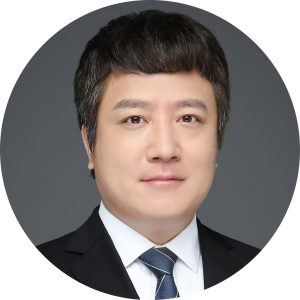 Yunlong Shang is a Professor at the School of Control Science and Engineering, Shandong University. He has long been engaged in research on safety control of energy storage batteries and was selected for the National Science Fund for Excellent Young Scholars and the Shandong Provincial Science Fund for Distinguished Young Scholars. As first or corresponding author, he has published 50 SCI-indexed papers, including five ESI Highly Cited Papers. He holds 52 granted Chinese invention patents, five U.S. invention patents, one European invention patent, and ten PCT patents. He has led more than ten projects, including an NSFC Joint Key Project and a Shandong Provincial Major Innovation Engineering Project. His honors include the Second Prize of the National Science and Technology Progress Award, the Gold with Congratulations of the Jury at the Geneva International Exhibition of Inventions, the Youth Science and Technology Award of the Chinese Association of Automation, the First Prize of the Ministry of Education Technical Invention Award, and an Outstanding Paper Award from IEEE Transactions on Industrial Electronics.
Co-chair: Prof. Limei Wang, Shenyang University of Technology, China
 Limei Wang is a professor and doctoral supervisor at the School of Electrical Engineering, Shenyang University of Technology. She received her Ph.D. in Power Electronics and Electric Drives from Shenyang University of Technology. She was a visiting scholar at the University of Wisconsin–Madison, USA, from 1998 to 1999 and again from 2016 to 2017. Her main research interests include modern AC servo control, multi-axis precision control, and intelligent servo control. She has been awarded two General Program grants from the National Natural Science Foundation of China and has led and completed several provincial projects, including the Liaoning Higher Education Outstanding Talent Support Program and projects funded by the Liaoning Natural Science Foundation. In recent years, Professor Wang has published more than 70 papers in leading domestic and international journals and at international conferences, over 30 of which have been indexed by SCI or EI. She has received two Second Prizes for Undergraduate Teaching Achievement in Higher Education in Liaoning Province.
Co-chair: Dr. Jiangpeng Yang, Tsinghua University, China
 Jiangpeng Yang received the B.S. degree in electrical engineering and automation from Shenyang University of Technology, Shenyang, China, in 2019, and the Ph.D. degree in electrical engineering from Southwest Jiaotong University, Chengdu, China, in 2025. He is currently a Postdoctoral Fellow at Tsinghua Shenzhen International Graduate School, Tsinghua University, Shenzhen, China. His research interests include the control techniques of the dual active bridge converter and multi-level converters, and the topology derivation techniques of AC-DC and DC-AC converters.
Co-chair: Dr. Xinyu Zhao, Tsinghua University, China
 Xinyu Zhao received the Ph.D. degree in electrical engineering from Shenyang University of Technology (National Engineering Research Center for Rare‑Earth Permanent Magnet Motors), Shenyang, China, in 2025. He is currently a Postdoctoral Fellow at Tsinghua Shenzhen International Graduate School, Tsinghua University, Shenzhen, China. His research interests include permanent magnet motor control, direct‑drive precision motion control, and fractional‑order control systems and their applications.
Co-chair: Asst. Prof. Weiyu Wang, Great Bay University, China
 Weiyu Wang received his Ph.D. in Electrical and Electronic Engineering from The Hong Kong Polytechnic University, where he subsequently served as a Postdoctoral Research Fellow. He is currently an Assistant Professor at the School of Advanced Engineering, Great Bay University, Dongguan, China. His research interests encompass novel electrical machine drive and modeling, vernier reluctance machines, switched reluctance machines, position sensorless drive technology, linear machines, motion control, fault-tolerant control, and intelligent control. He serves as a Guest Editor for IET Power Electronics and is a recipient of the 2023 IEEE Transactions on Energy Conversion Star Reviewer Award.
Co-chair: Prof. Pengcheng Zhao, Southwest Petroleum University, China
 Pengcheng Zhao received the B.S. degree in Electrical Engineering and Automation and the M.S. degree in Control Engineering from Southwest Petroleum University (SWPU), Chengdu, China, in 2018 and 2021, respectively, and the Ph.D. degree in Electrical Engineering from Southwest Jiaotong University (SWJTU), Chengdu, China, in 2025. He is currently a Lecturer with the School of Electrical Engineering and Information, SWPU. His research interests include multilevel converters, photovoltaic grid-connected inverters, power quality regulation, motor drive control, and renewable energy power conversion systems.
Submission Methods
Please log in the Submission System (投稿链接); ( .pdf only) to submit your full paper and abstract.
Please prepare your paper under the Template.doc (文章模板)or Conference latex template
The full paper should be at least 4 full pages and less than 9 pages. The authors should admit that the submitted paper is original, unpublished, and not submitted concurrently for publication elsewhere.
-
August 15th, 2026
Submission of Full Paper / 投稿截止
August 15th, 2026 | 2026年8月15日 -
August 25th, 2026
Notification Deadline / 录用通知
August 25th, 2026 | 2026年8月25日 -
September 1st, 2026
Registration Deadline / 注册截止
September 1st, 2026 | 2026年9月1日